
Inside the Newsroom
CBC studios, sound stages, and anchor desks
Studios are the visible part of a broadcast: the desk, the backdrop, the lights. Here is how the rooms are laid out, what a sound stage is for, and how the sets get ready for air.
What a sound stage is
A sound stage is a large, controlled space built for production. It has the height, power, and acoustic treatment that a normal room does not. In a broadcast facility, a sound stage may host a large set, a special program, or a production that needs more floor space than a standard studio. The point of a sound stage is control: over light, sound, and the movement of people and cameras.
How a news studio is laid out
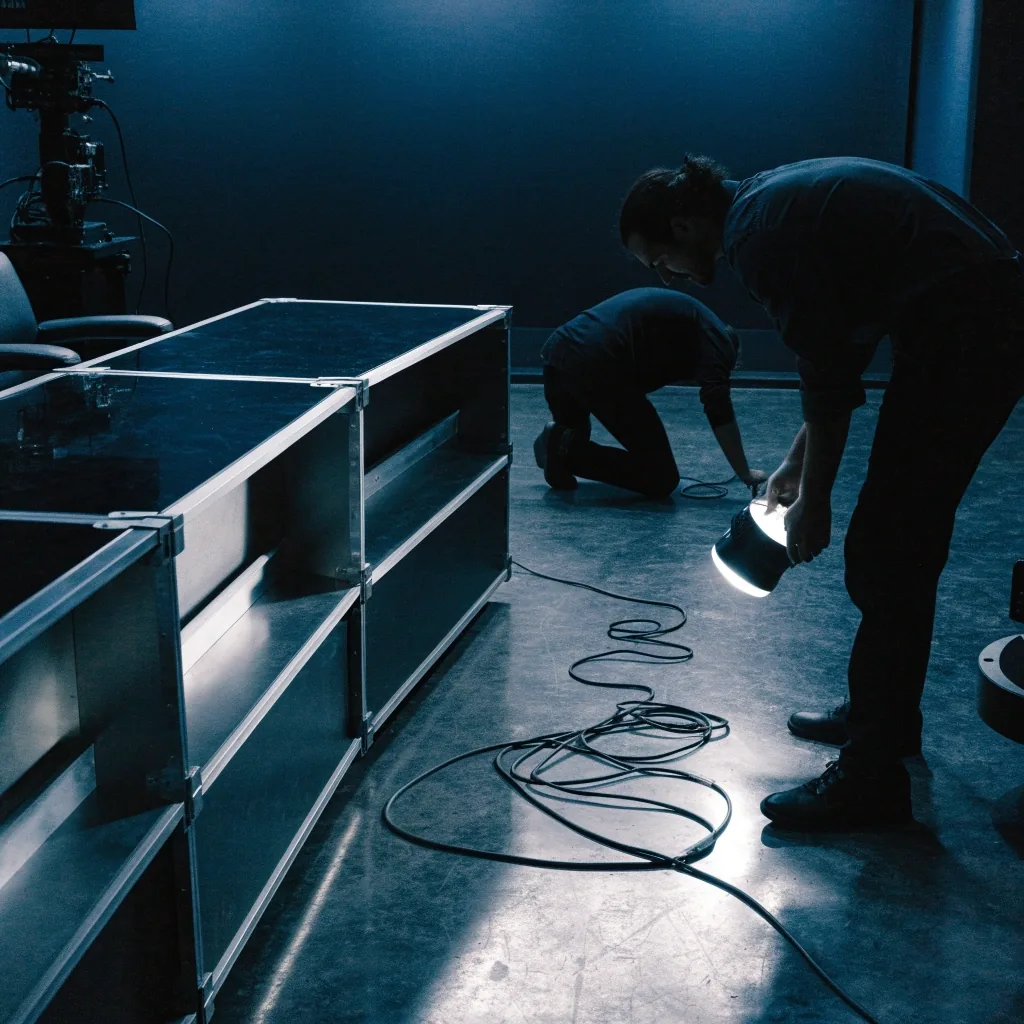
A news studio usually has an anchor desk, a backdrop or video wall, and space for a weather presenter or a guest. Cameras are positioned to cover the desk from several angles. Lighting is arranged so that the anchor looks consistent regardless of which camera is live. The layout is designed around the shots the director needs, not around how the room looks to a visitor.
That last point decides almost everything. A studio looks odd in person: dark floor, cables taped down, lights hanging low and hot. The wide shot that opens a newscast has to show a clean set, and the tight shot on the anchor has to keep the background from competing. Every camera position is chosen for one of those jobs, and the rest of the room is arranged to keep them working.
The anchor desk and what it signals
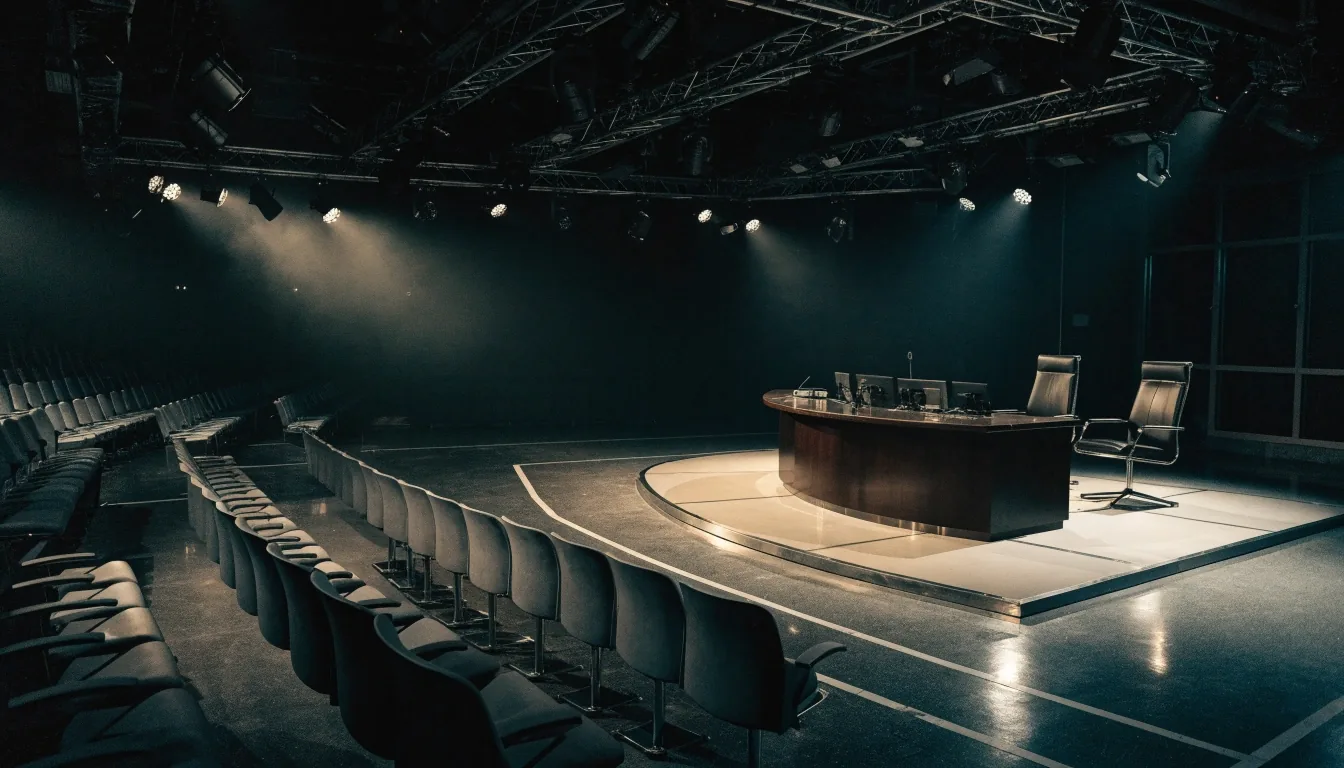
The anchor desk is the visual center of a newscast. It signals stability and continuity, which is why it rarely changes dramatically. When it does change, it is usually tied to a new program format, new hosts, or new technology. The desk itself is often less important than the shots it enables: the wide shot that establishes the space, the tight shot that focuses on the anchor.
Sets are rebuilt, sometimes fast
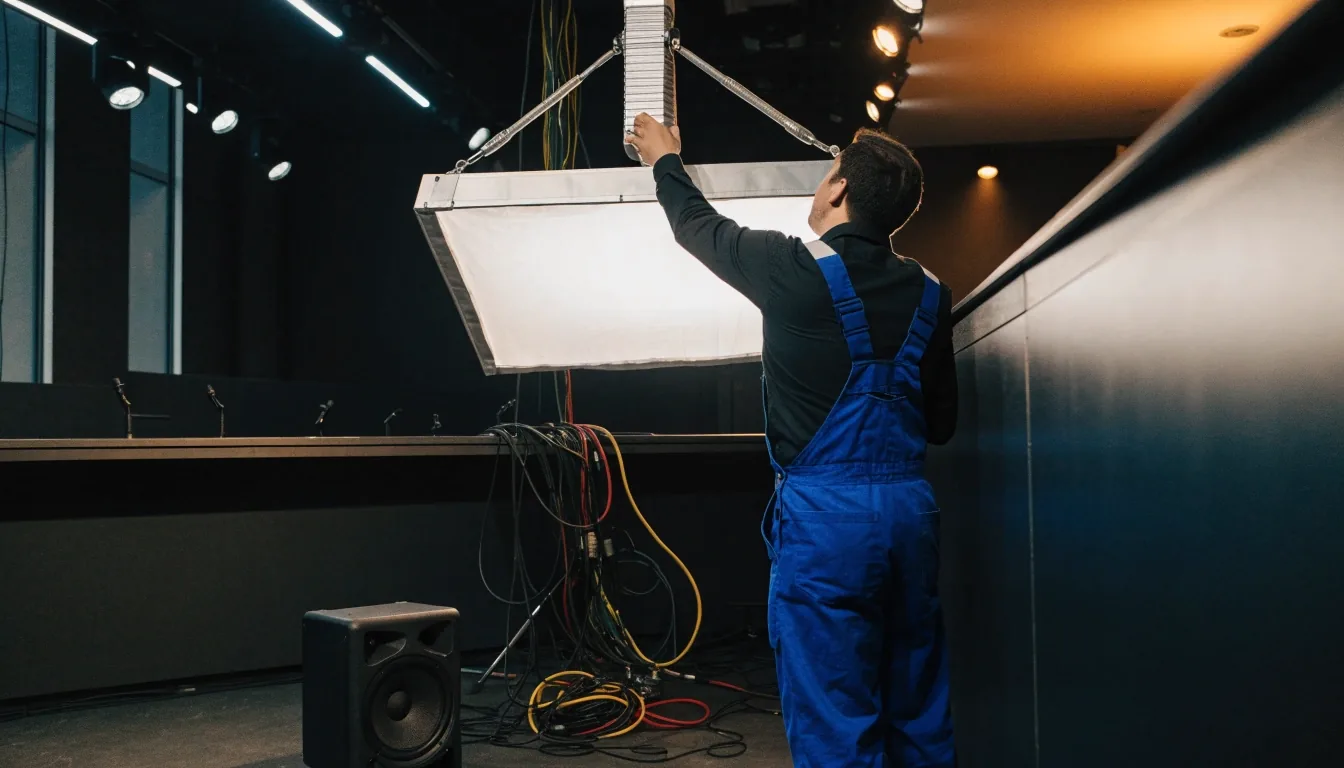
CBC has described tearing down and rebuilding a local TV set over a weekend when a newsroom was refreshed for new hosts. That kind of change happens between broadcasts, with crews working when the studio is dark. The old set may be open to the newsroom before a renovation, which gives staff a chance to see the space change. After the rebuild, the studio is ready for the next program.
The reason it can move that quickly is planning, not speed for its own sake. A rebuild is scheduled around the broadcast calendar, the new set pieces are built and tested off the floor first, and the technical crew re-marks camera positions before the first rehearsal. When the studio comes back up, the lighting and camera marks are already close, so the first rehearsal is about the program and not about starting over.
The set you see on air is therefore a working object with a maintenance life. Panels get scuffed, screens get replaced, desks get rewired. A studio that looks unchanged for years is usually one where a lot of quiet upkeep is happening out of view.
A weekend rebuild means the studio is stripped, the new set is set out, lighting and camera marks are re-done, and the room is checked again before the next live program.
CBC Toronto Studios and the Toronto Broadcasting Centre
The Toronto Broadcasting Centre at 250 Front Street West is described by CBC as a major production and broadcasting building. It houses English-language radio and television networks, and it includes master control and production spaces. For anyone studying broadcast operations, it is a useful example of how much infrastructure sits behind a single newscast.
Studios across the network
The CBC Vancouver Broadcast Centre
The CBC Vancouver Broadcast Centre at 700 Hamilton Street is described by CBC as an integrated newsroom home to CBC News in BC, The National, and CBC Radio One in Vancouver. Its newsroom tour highlights TV control rooms, news sets, and radio booths. CBC says the redeveloped Broadcast Centre and Plaza brought new life to the downtown entertainment district since 2009.
The CBC Ottawa Production Centre
CBC's Ottawa production centre is an office and studio complex in downtown Ottawa, serving English and French operations in the National Capital Region. It is associated with political programming such as Power & Politics and Rosemary Barton Live. The newsroom is described as visible from Sparks Street through large ground-level windows, which makes the work unusually public for a broadcast facility.
How sets differ by program
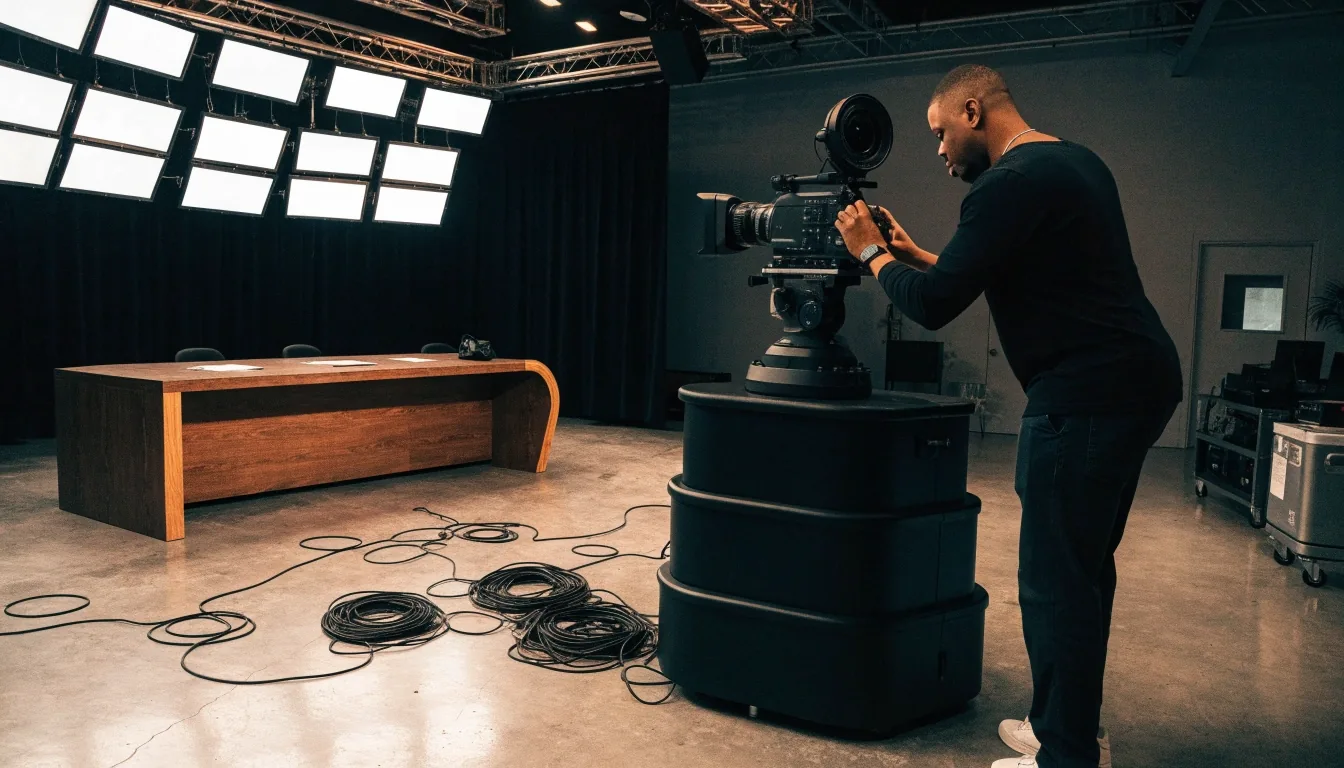
A national newscast, a local newscast, and a political talk show need different sets. A talk show may use a desk for a host and a guest, with space for a live audience or a panel. A local newscast may use a smaller set with a weather area. The set is built around the program's format, and it changes when the format changes.
What visitors can see on a tour
CBC has published newsroom tour material for some facilities, including Vancouver and Edmonton. Tours typically show control rooms, news sets, and radio booths, and they explain how the spaces connect. They do not show everything. Security, proprietary systems, and live editorial decisions stay off the tour.
This site is an independent educational resource. It does not arrange tours and it is not affiliated with CBC. If you want to ask a question about how a studio is put together, use the contact page.
On a published tour
Questions about studios and sets
What is a sound stage used for?
Open
A sound stage is a large controlled production space used for sets and programs that need more room, height, or acoustic control than a standard studio.
Where is the CBC Vancouver Broadcast Centre?
Open
At 700 Hamilton Street in Vancouver. CBC describes it as an integrated newsroom home to CBC News in BC, The National, and CBC Radio One in Vancouver.
Can I visit a CBC studio?
Open
CBC has published tour material for some facilities, but access is limited. This site does not arrange tours.
Why does an anchor desk rarely change?
Open
The desk carries the continuity of the program. Changing it usually means a new format, new hosts, or new technology behind the scenes, so it is rebuilt only when one of those things changes.
Where the studio fits in the rest of the building
A set only works because the control room, the field crews, and the regional newsrooms are feeding it. If you want the whole picture, start with the control room or follow how a story gets from the field to air.
Inside the Newsroom
250 Front Street West, Toronto, ON M5V 3G5, Canada
Monday to Friday, 9:00 AM – 6:00 PM · +1-416-205-3311 · [email protected]