
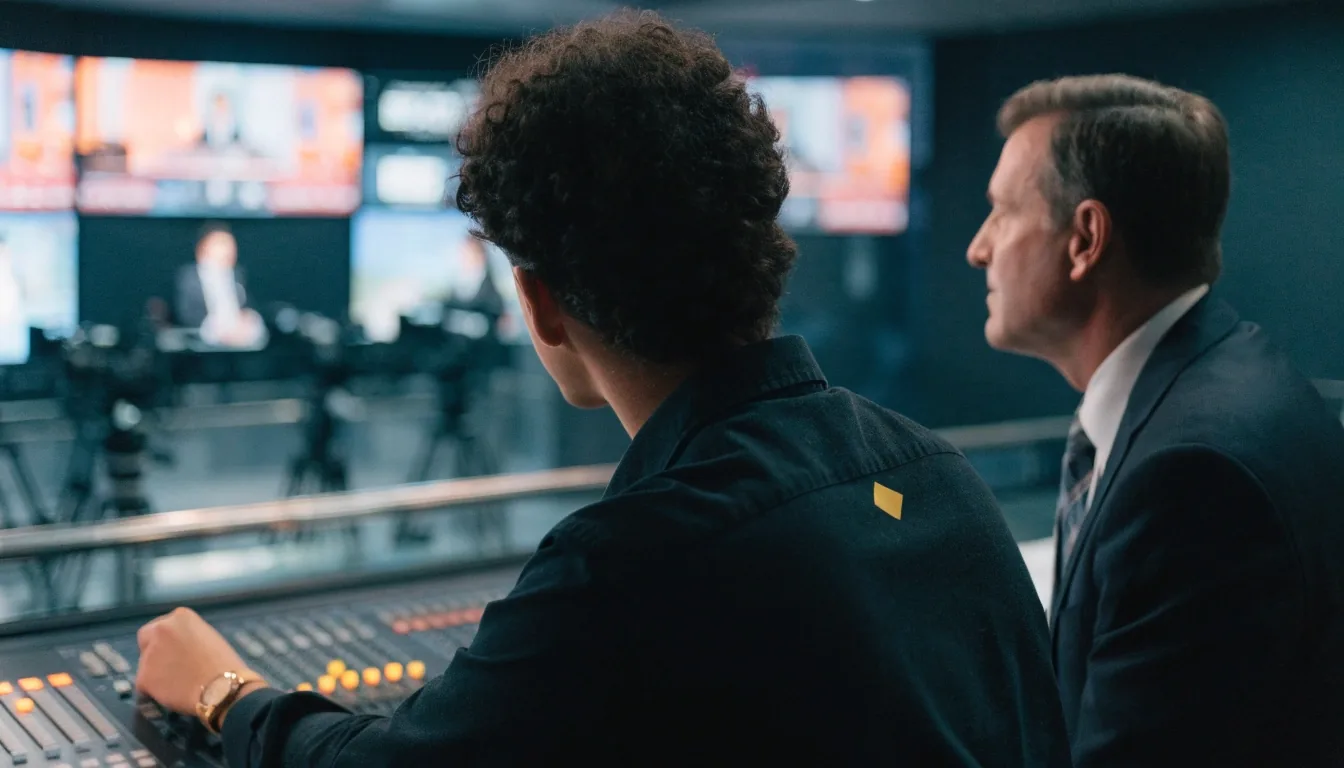
Toronto Broadcasting Centre
Inside the CBC News control room
A live newscast is assembled here, second by second. This page walks through the multi-camera switching, audio coordination, and rundown discipline that keep a broadcast on air.
The rundown is the spine of the show
Timed to the secondA rundown is the ordered list of everything that will appear in a broadcast: stories, live hits, video clips, graphics, and breaks. The producer and the show's writers build it before air and revise it as news develops. When a live hit runs long, the rundown absorbs the change and something later gets trimmed. The rows below show how the rail tightens as air time approaches.
What the control room actually does
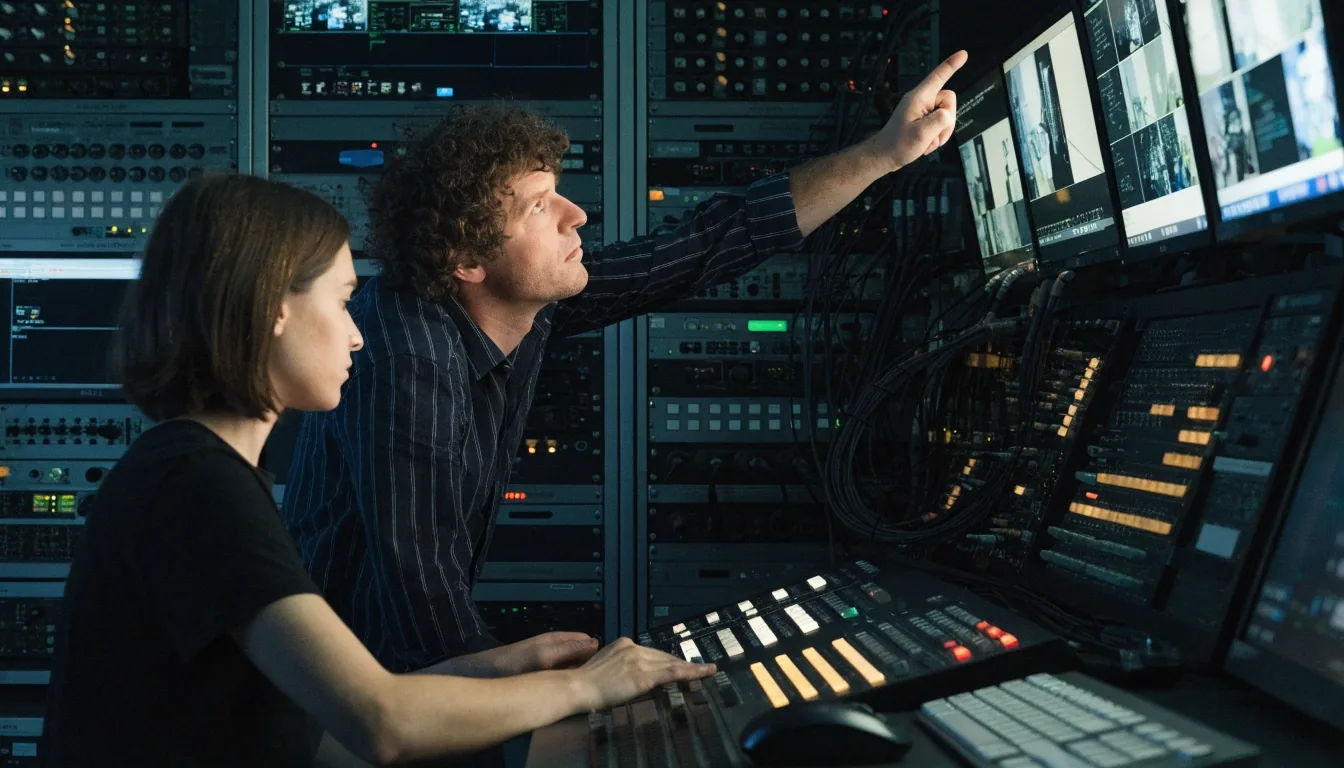
During a live broadcast, the control room takes inputs from studio cameras, remote feeds, and graphics systems and turns them into one continuous program. The director decides which camera is live at any moment. The producer tracks the rundown and calls for changes when news breaks. Audio is mixed so that microphones, music, and remote feeds stay balanced.
It is a dark, quiet room lined with monitors, and it is the reason a broadcast looks smooth even when it is not. Every second on air is the result of a decision made in this room, usually several of them, in the space of a breath.
Inputs into one program
- Studio camerasSwitched live
- Remote field feedsConfirmed first
- Graphics systemsTriggered on cue
- Audio sourcesBalanced live
- Program outputOne continuous signal
Multi-camera switching, explained
A studio newscast typically uses several cameras: a wide shot of the anchor desk, a tighter shot of the anchor, and often a second angle for a guest or a weather presenter. The director switches between them using a vision mixer, sometimes called a switcher.
The goal is to keep the picture changing at a pace that holds attention without being distracting. A cut that feels natural is usually the result of a director anticipating the anchor's next move.
Audio coordination
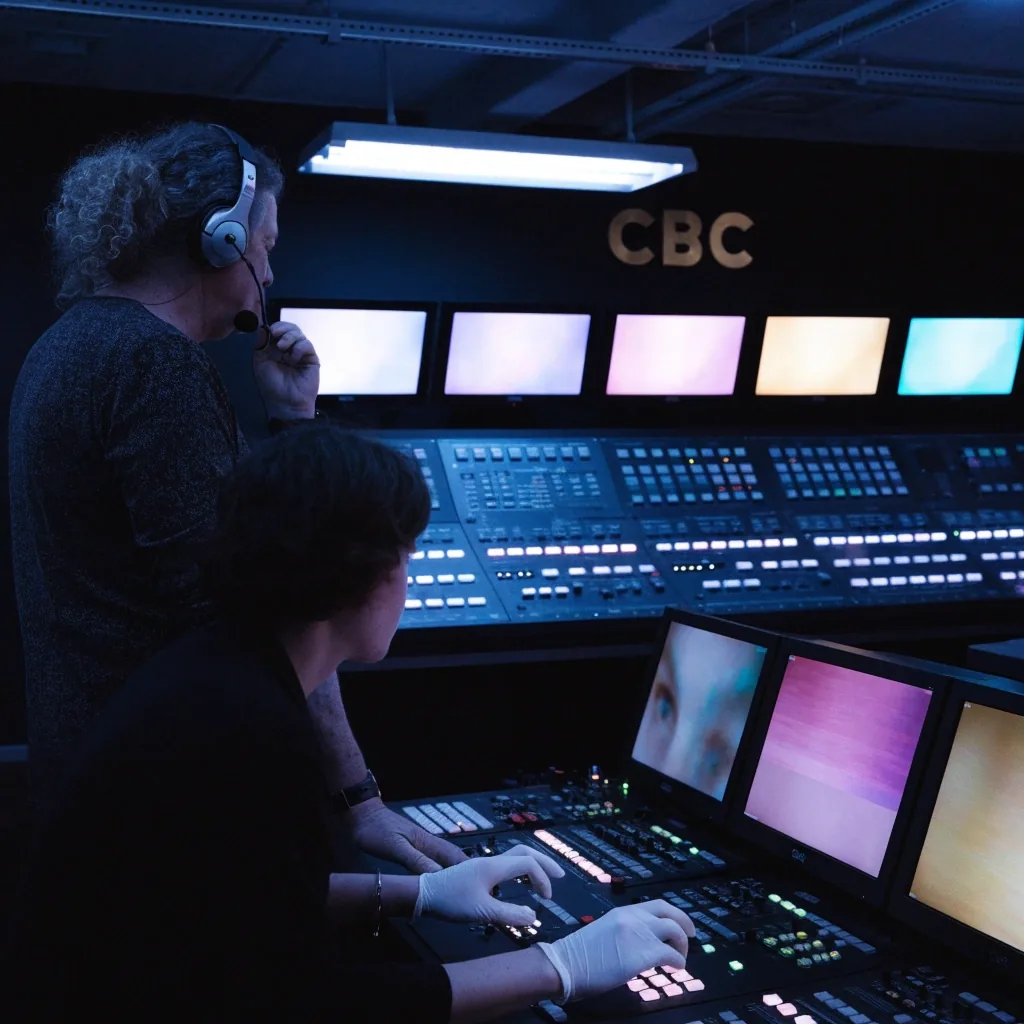
Audio in a control room is its own job. An audio operator balances the anchor's microphone, a guest's microphone, music, and any remote feeds. Live hits from the field often arrive with their own audio issues, so the operator has to be ready to adjust quickly.
When audio fails, viewers notice immediately. That is why this role is treated as critical during a live broadcast, and why the operator sits within reach of the director rather than in a separate room.
Anchor microphone
Kept steady across the whole show, with levels checked before air rather than after.
Guest and panel
Handled separately, because a second voice in the room changes the balance instantly.
Music and stings
Cued from the rundown so the show's open and breaks land on the same beat every night.
Remote feeds
Often the roughest source in the mix, arriving with line noise or a delay that has to be smoothed out live.
Graphics and the look of the show
Lower thirds, maps, charts, and full-screen graphics are prepared in advance and triggered during the broadcast. A graphics operator works from the rundown and from cues in the control room.
The timing matters. A lower third that appears too early spoils a reveal, and one that appears too late looks sloppy. Because graphics sit on top of live pictures, a late trigger is one of the few mistakes a viewer can spot from the couch without knowing anything about production.
Master control
Where a finished broadcast leaves the building and reaches the audience. In a large facility like the Toronto Broadcasting Centre, master control handles multiple program feeds.
It is also where problems are caught. If a feed drops, master control is often the first to know, and it coordinates the response across the building.
Who is in the room
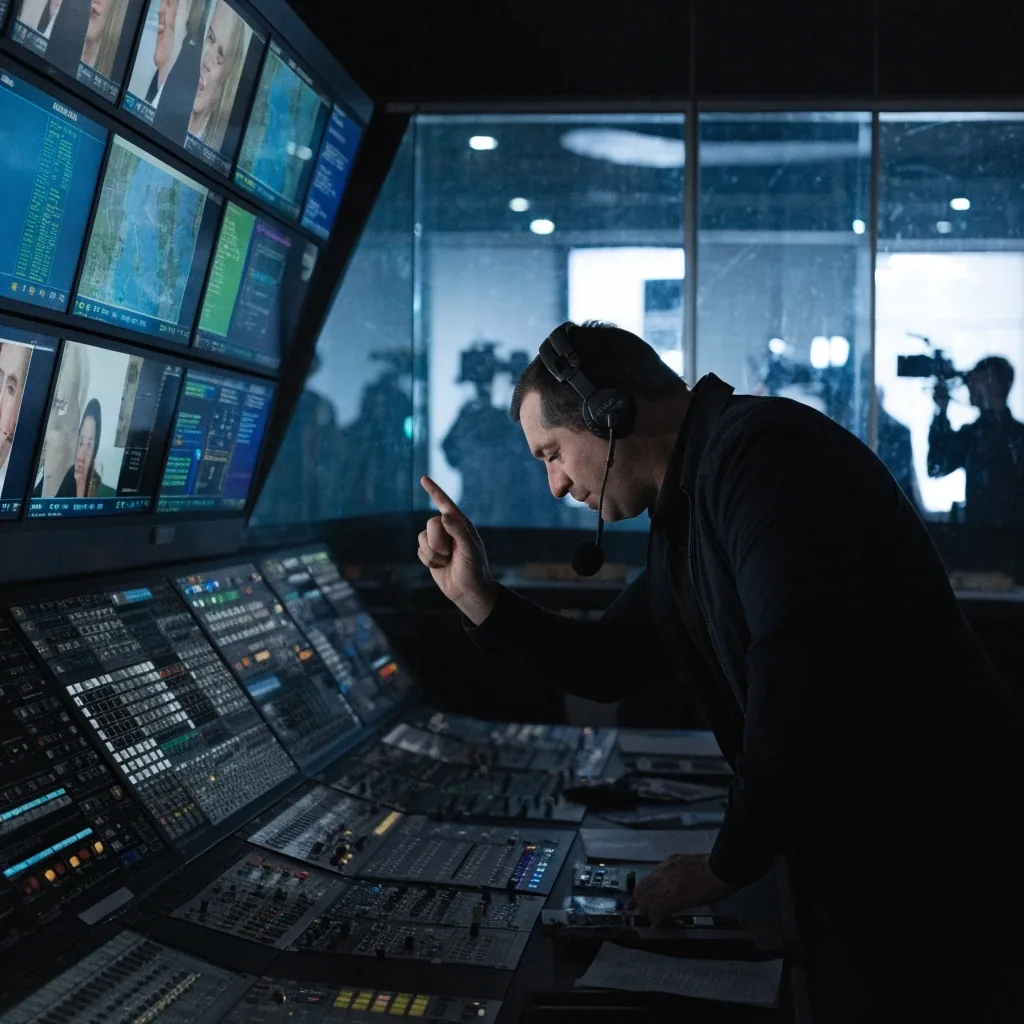
A typical control room includes a producer, a director, a technical director operating the switcher, an audio operator, a graphics operator, and often a production assistant keeping time. In a smaller regional newsroom, one person may cover more than one of these roles. The roles stay the same even when the headcount shrinks.
Smaller newsrooms
A regional control room may produce a local newscast and also contribute live hits to national programs. That dual role means the crew has to switch between local and national priorities within the same shift, often with one person covering two or three of the roles above.
How a live hit lands in the control room
Before air
The control room confirms the feed and the reporter's audio while the slot is still a line in the rundown.
During the hit
The director decides whether to stay with the reporter or cut to video, listening to the producer and watching the clock.
If the feed fails
The anchor is cued to cover, the control room moves to the next item, and the lost slot is logged for the next editorial meeting.
Feeds drop, microphones fail, and reporters lose their earpiece. The control room's job is to keep the broadcast moving regardless. Anchors are trained to fill time, producers reorder the rundown, and technicians troubleshoot in parallel. Viewers usually see a smooth recovery because the recovery is planned for, not improvised from scratch.
Questions about the control room
What does a TV control room do during a live newscast? Open Close
It assembles the broadcast from cameras, remote feeds, and graphics, with a director switching between sources and a producer tracking the rundown. Audio and graphics are handled by dedicated operators.
What is a rundown? Open Close
A rundown is the ordered, timed list of everything in a broadcast, including stories, live hits, video, and breaks. It is the document the control room works from during the show, and the producer revises it right up to air.
What is master control? Open Close
Master control is where a finished broadcast leaves the building and reaches the audience. It also catches feed problems and coordinates the response, which is why it sits downstream of the production control room in the signal path.
Where to go next
Inside the Newsroom · 250 Front Street West, Toronto, ON M5V 3G5, Canada · +1-416-205-3311 · [email protected] · Monday to Friday, 9:00 AM – 6:00 PM