
Inside the Newsroom
From field to air: how a live hit happens
A reporter, a camera, a few minutes on air. Behind it, a field producer, a technician and the control room are working the same clock.
A live hit is a chain of people holding the same minute
A live hit looks simple: a reporter, a camera, a few minutes on air. Behind it is a chain of coordination between a field producer, a reporter, a technician and the control room. This page walks through how a story moves from the field to a live broadcast, including line-up changes and the handoff to the control room.
The order below is roughly how a shift runs, but nothing about it is fixed. Times shift, positions move, and a story that was going to be a packaged report at 6pm can become a live hit at 6:04. The crew that handles that well is the crew that planned for it.
The line-up as the deadline approaches
A live hit, in the order the crew hears it
- 1 The field producer locks the location and the time with the control room.
- 2 The crew arrives early, tests the signal and the reporter's earpiece.
- 3 The reporter writes short and stays ready for a question from the anchor.
- 4 The line-up changes and the hit is extended, shortened or moved.
- 5 The director takes the shot and the hit goes to air.
A two-minute hit can carry a full afternoon of coordination before the anchor ever says the reporter's name.
The field producer's job
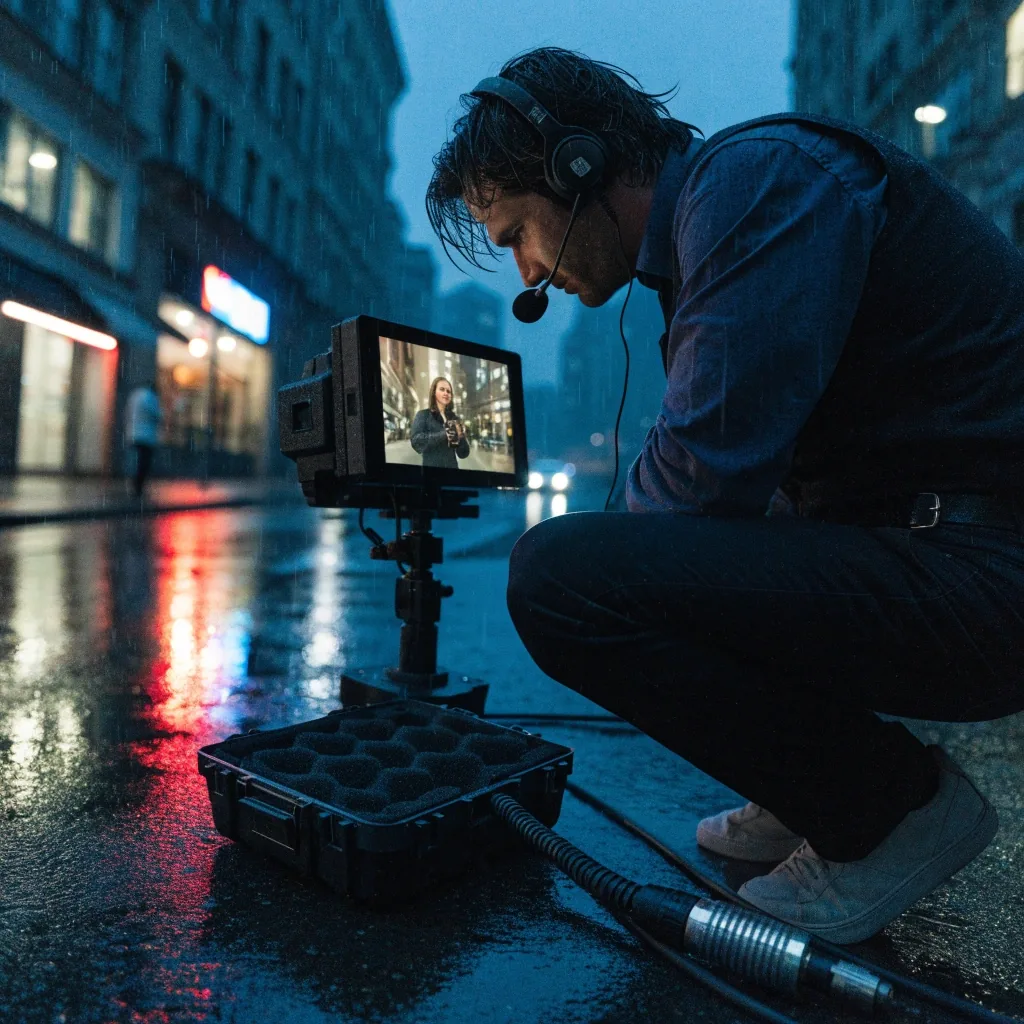
A field producer coordinates the logistics of a story in the field. That includes choosing a location, arranging interviews and making sure the reporter has what they need. For a live hit, the field producer also works with the control room to confirm the time and the feed.
The role is part planning, part problem-solving, because the field rarely cooperates with the plan. A source who agrees to talk at 4:30 is not there at 5:00. A plaza that looked quiet on the scout fills with a marching band. The producer's job is to know the plan well enough to change it quickly.
On a busy day that means holding three things at once: the reporter's needs, the technician's setup, and the control room's timing. When those three disagree, the producer decides which one bends.
What the producer decides
- The location and how it reads on camera
- Who the reporter talks to, and in what order
- The live window, confirmed with the control room
What the producer checks
- Signal strength and a clean audio feed
- Background noise and bystanders in frame
- A fallback plan if the feed drops
Getting to the location
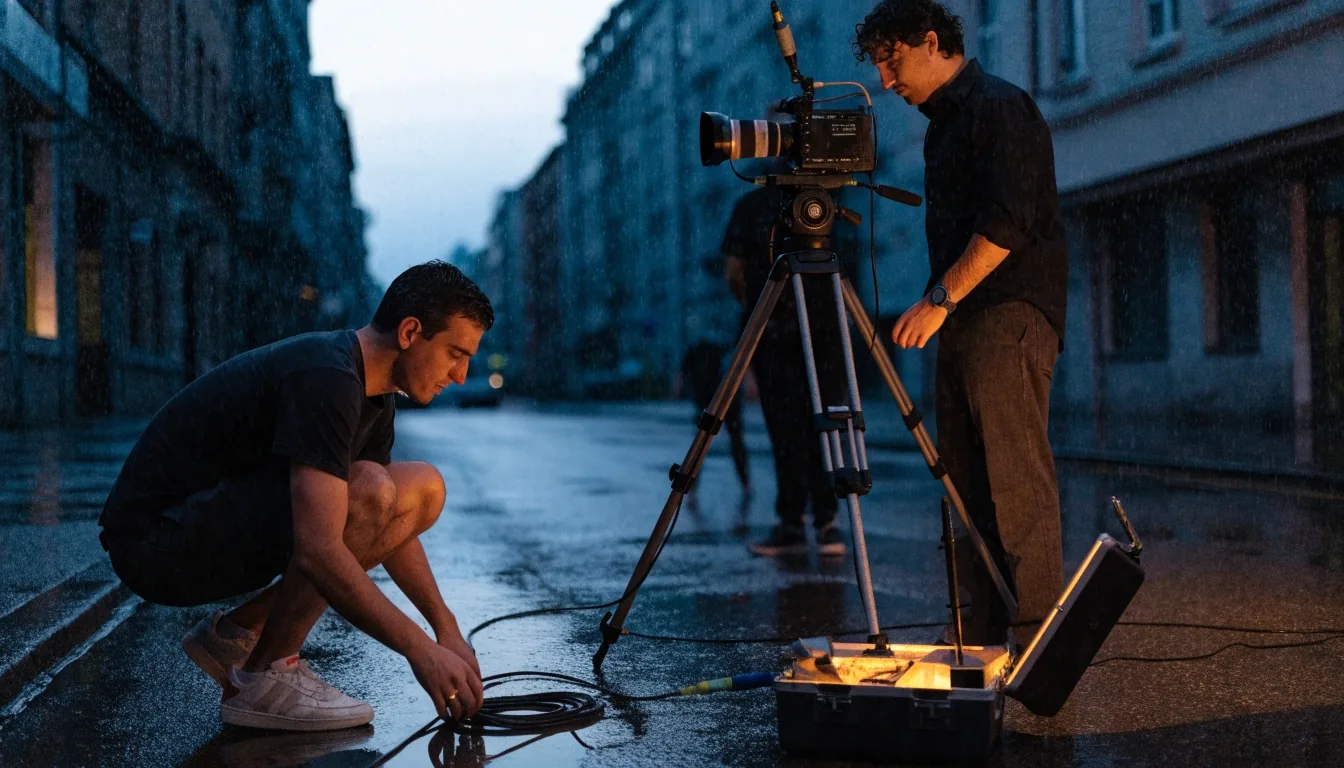
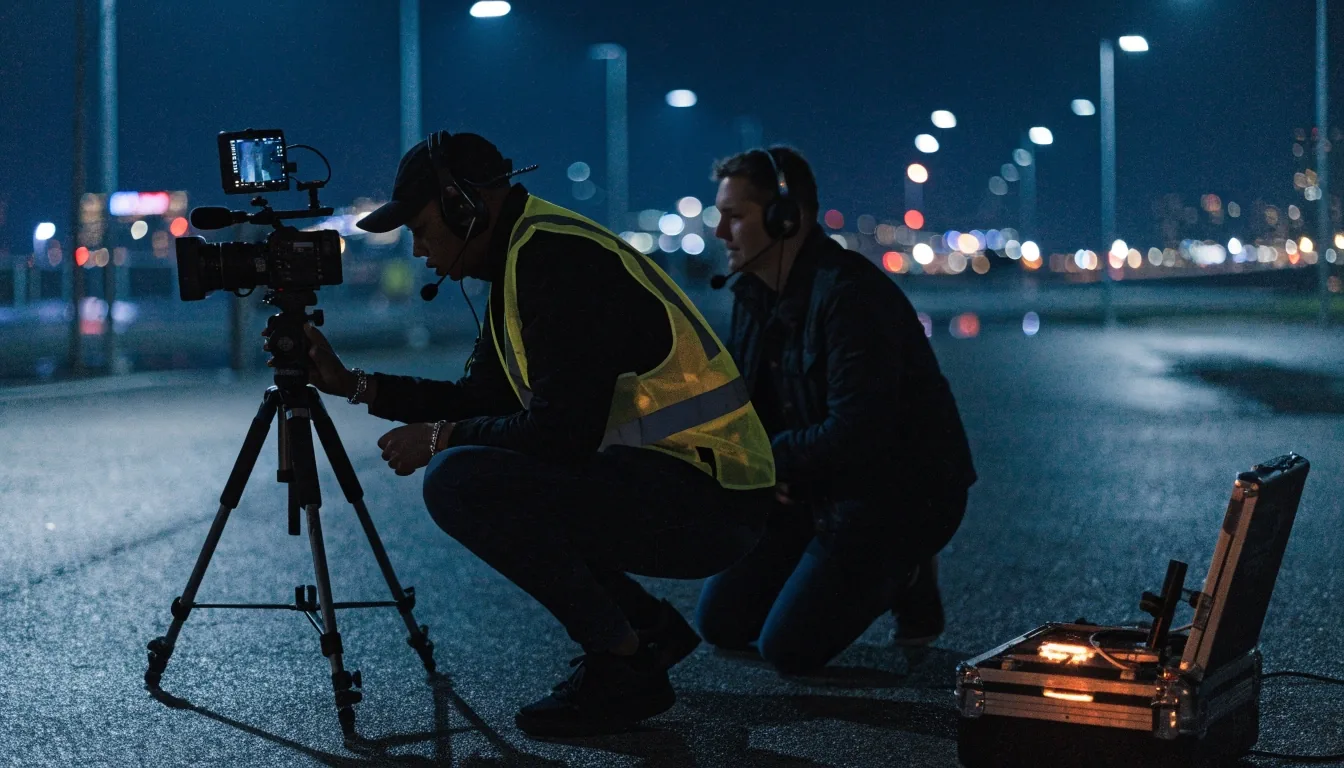
A crew arrives early, often well before the live window. The camera is set up, the signal is tested and the reporter checks their earpiece. If the location is a busy street or a public building, the crew also manages bystanders and background noise.
A good live hit location looks relevant on camera and allows a clean audio feed. That is why so many hits stand in the same handful of places — a courthouse steps, a city hall plaza, the corner outside a plant gate. The location is part of the story the viewer is being told.
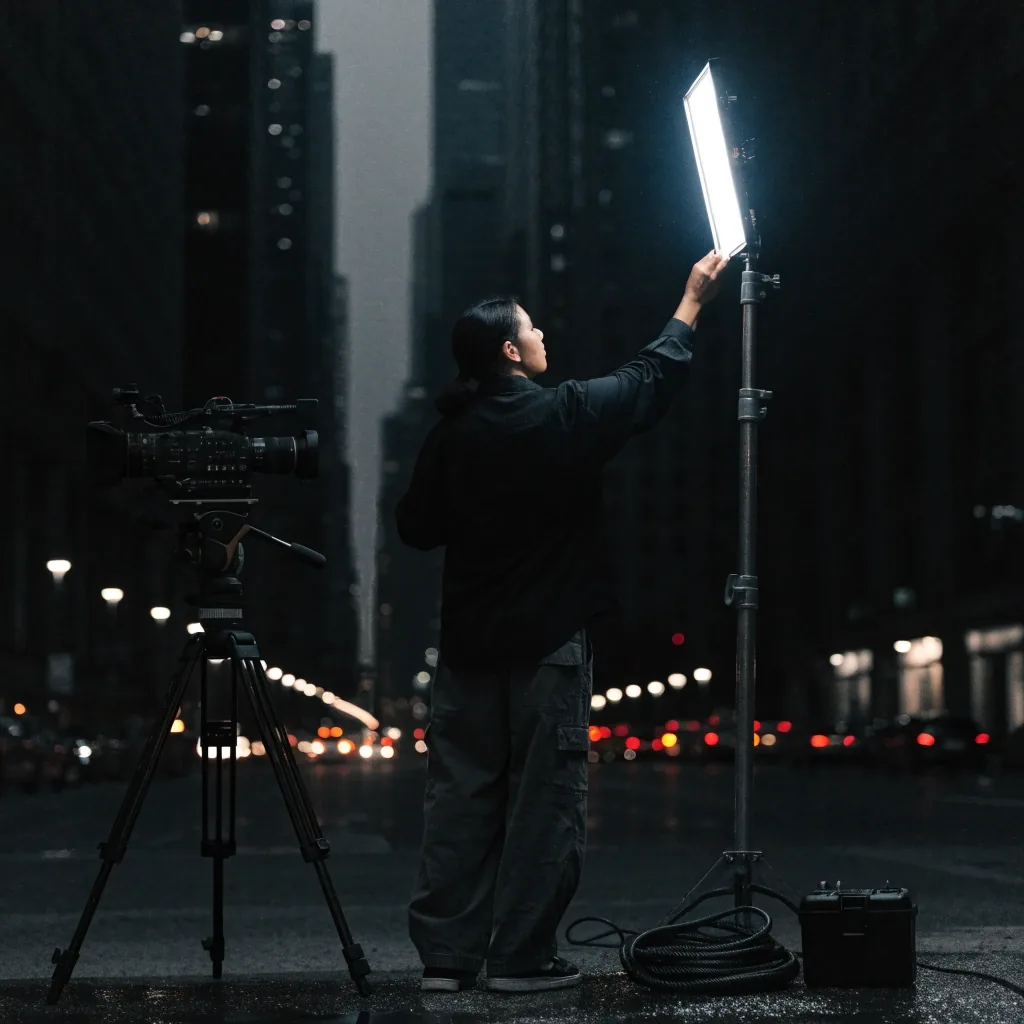
The setup happens long before the reporter speaks. Most of the live window is spent on the parts the viewer never sees.
Writing short, and rewriting when the line-up moves
A live hit is short, usually less than two minutes. The reporter has to deliver the key facts and stay flexible enough to answer an anchor's question. Scripts are written quickly, sometimes on a phone or a notepad, and revised as new information arrives. The writing is tighter than a packaged report because there is no time for a long setup.
In practice that means the first sentence carries the news, the second names who is affected, and the third is the reporter's standing position — the line they can say at any length. If the anchor asks something unexpected, the reporter can fall back on it without losing the thread.
A line-up is the plan for a broadcast, including which stories run, in what order, and at what length. It is close to a rundown, and in some newsrooms the terms overlap. When a story develops, the line-up changes: a live hit may be extended, shortened or moved earlier.
The field crew is told about changes through the control room or a producer, sometimes only minutes before air. That is why the reporter keeps the standing position ready and the technician keeps the feed warm — a change of thirty seconds is normal, not a crisis.
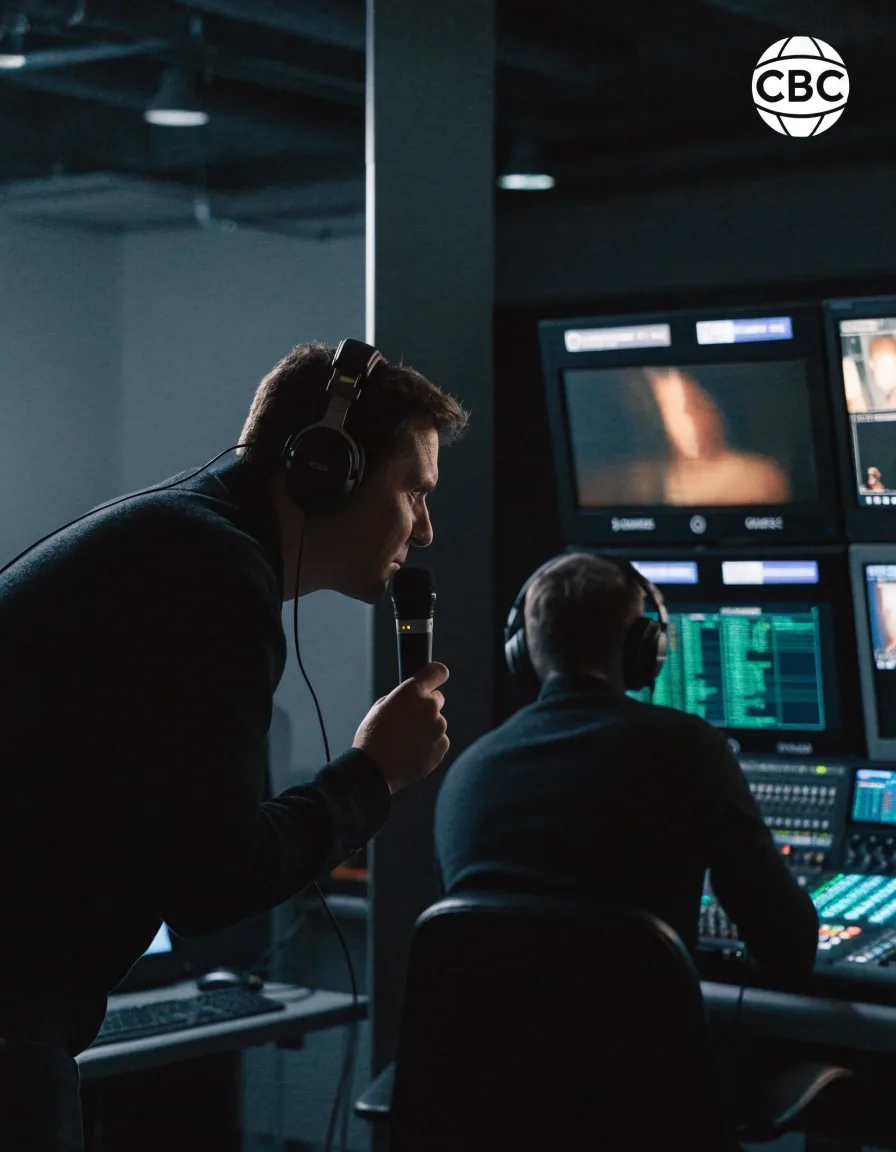
The director decides the shot while the feed is already live. The field hears it through the earpiece.
The handoff to the control room
Before the hit, the control room confirms the feed and the reporter's audio. The director decides how to frame the shot and whether to cut to video. The anchor introduces the reporter, and the hit begins. From the field, the reporter hears the anchor and the control room through an earpiece, which is how timing is managed.
The handoff is a short, plain exchange: the control room says the hit is next, the reporter confirms they are ready, the anchor reads the introduction, and the director takes the shot. If anything is wrong, it usually shows up in the ten seconds before air, not during it.
Feed confirmed
Signal and audio are checked before the anchor reaches the reporter.
Shot decided
The director chooses the framing and whether to cut to video mid-hit.
Cue heard
The reporter takes the timing from the earpiece, not from a countdown.
When a live hit goes wrong
Feeds drop. Audio fails. A reporter loses the earpiece. The control room's response is to keep the broadcast moving: the anchor covers, the producer reorders the line-up, and the technician troubleshoots. The field crew's job is to stay calm and be ready to go back on air if the feed returns.
Remote coordination across regions
A live hit does not always come from the field. A reporter in a regional newsroom may appear on a national program from a regional studio. That requires coordination between the regional control room and the national one.
The same reporter may also file for radio and digital platforms in the same shift. That means the story is written more than once — once for air, once for the web, and once for radio, each with its own length and tone.
One story, three destinations in the same shift
What the viewer sees
On air, a live hit looks like a conversation between the anchor and the reporter.
What the viewer does not see is the coordination that made it possible: the feed check, the line-up adjustment, the director's cue and the crew standing by in case something fails. None of it is on camera, and all of it is the reason the two minutes look easy.
If you want to keep following that chain of work, the next stop is the room where the shot is chosen and the timing is kept.
Questions visitors ask about a live hit
What does a field producer do?
A field producer coordinates the logistics of a story in the field, including the location, interviews, and the live hit's timing and feed.
What is a line-up?
A line-up is the plan for a broadcast, including which stories run, in what order, and at what length. It can change as news develops.
How does a live hit reach the control room?
The field feed is confirmed before air, and the control room manages the shot, the audio, and the timing during the hit. The reporter hears cues through an earpiece.
Continue the walk through the building
Inside the Newsroom is an educational resource about how a CBC News broadcast studio and newsroom operates — control rooms, anchor desks, field production and regional hubs. If a question about the process is not answered here, the editorial team can point you to the right page.
Reach the team
- 250 Front Street West, Toronto, ON M5V 3G5, Canada
- +1-416-205-3311
- [email protected]
- Monday to Friday, 9:00 AM – 6:00 PM